
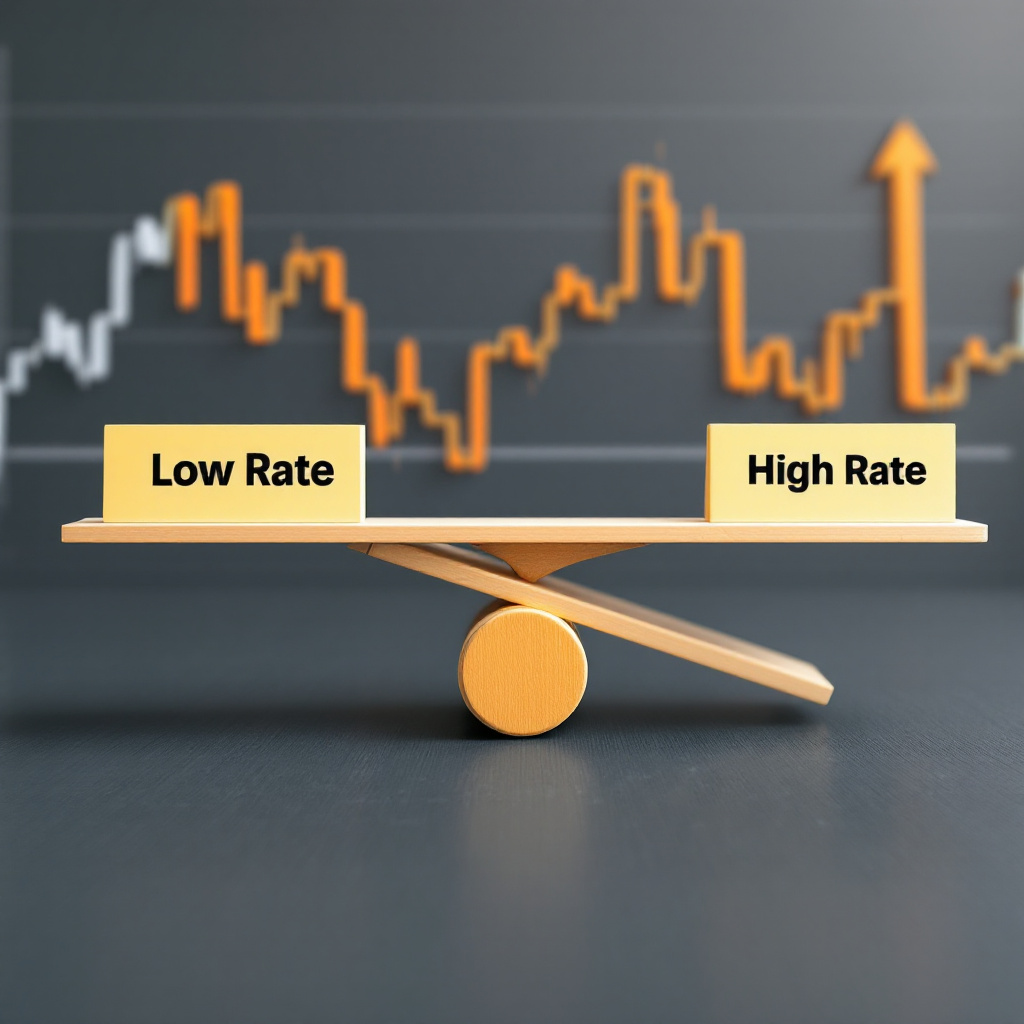

The Ups and Downs of Adjustable-Rate Loans: What You Need to Know
When it comes to navigating the labyrinth of mortgage options, many potential homeowners find themselves contemplating the intriguing yet enigmatic world of adjustable-rate loans. These loans, characterized by interest rates that can shift like the wind based on market conditions, promise a tantalizing possibility of lower initial payments compared to their fixed-rate cousins. Yet, they come with their own set of challenges that potential borrowers must consider. So, buckle up as we dive deep into the whirlwind that is the adjustable-rate loan, exploring its nooks and crannies and weighing the benefits against the drawbacks.
The Basics: What Exactly Are Adjustable-Rate Loans?
First off, let’s get clear on what we’re talking about. Adjustable-rate loans, commonly known as ARMs, are a type of mortgage where the interest rate is not set in stone. Unlike fixed-rate mortgages, where you’re tied to one interest rate for the entire life of the loan, ARMs start with an interest rate that sticks around for a period—often somewhere between three to ten years. After this introductory phase, the rate can start to change—usually once a year.
These loans are pegged to specific financial indexes, which fluctuate over time. Furthermore, they include a margin—a fixed percentage added to the index—that determines the actual interest rate applied to your loan. Additionally, to protect borrowers from sky-high interest rates, ARMs often have caps on how much the rate can increase or decrease during each adjustment and over the life of the loan.

The Alluring Benefits of ARMs
At first glance, the allure of adjustable-rate loans can be potent:
- Lower Initial Interest Rates: The initial phase of an ARM often offers a lower interest rate compared to fixed-rate mortgages. This translates to lower monthly payments early in the loan term, which can be appealing to cash-strapped homebuyers or those who want to keep more money available for other investments.
- Potential for Savings: If interest rates remain stable or even dip, homeowners with an ARM can benefit from reduced payments after the adjustment period—though this is contingent on market behavior.
- Flexibility for Short-Term Homeowners: If you plan on moving or refinancing before the initial fixed-rate period lapses, an ARM may save you a bundle since those lower initial rates will stick with you for the duration of your tenure in the home.
These benefits can make ARMs particularly appealing in certain economic climates or for specific financial strategies.
The Risky Business of ARMs
Yet, as the old saying goes, There’s no such thing as a free lunch. ARMs do come with their fair share of risk:
- Interest Rate Fluctuations: After the grace period of the initially fixed rate, there’s the potential for your interest rate—and by extension, your monthly payments—to skyrocket, subjecting you to financial strain.
- Unpredictable Payment Schedules: With their ties to unpredictable market indices, ARMs can make it challenging to budget long-term financial plans. Your payment today might not be your payment next year.
- Complexity and Confusion: Let’s admit it—mortgages are already mind-boggling. Throw in changing variables like those in ARMs, and borrowers can find themselves utterly perplexed, potentially leading to costly misunderstandings.
Decoding the Jargon: Key Components of ARMs
Peeling back another layer, ARMs have a few key elements worth understanding:
- The Index: This is the benchmark interest rate that dictates future changes in the ARM’s interest rate. Common indices include the LIBOR, the COFI, and the MTA. Each can be affected differently by market trends.
- The Margin: A fixed percentage added to the index, the margin determines the actual rates applied to your loan.
- Rate Caps: Offering a safety net, rate caps limit how much your interest rate can change at every adjustment, annually that is, as well as overall. They’re a borrower’s best friend when market conditions sour.
- Initial Rate Period: The initial window during which the interest rate is fixed, usually ranging from three to ten years. During this period, homeowners enjoy lower, stable payments.
Understanding these components is crucial for anyone considering an adjustable-rate loan, as they’re key to navigating the particulars of what you’re signing up for.
Who Should Consider an ARM?
Given the twists and turns ARMs present, they’re not for everyone. But, they might be the right fit for:
- Short-Term Homeowners: If you’re banking on selling the home or refinancing before the adjustable period kicks in, ARMs could be a savvy way to save money in the interim.
- Confident Risk Takers: If you’re someone who follows market trends closely and is comfortable with variability in mortgage payments, an ARM could potentially offer financial advantages.
- Investors Seeking Lower Initial Payments: Those keen on keeping expenditures low on investment properties might find ARMs useful, banking on income from the investments to handle any future increases.
Making a Decision: Weighing Your Options
Clearly, deciding between an ARM and a fixed-rate mortgage isn’t a matter of flipping a coin. Admittedly, it’s less like a black-and-white decision and more akin to a choose-your-own-adventure with your financial future at stake. Here’s a quick rundown to help guide your thought process:
- How Long Do You Plan to Stay? If you’re committed to staying for the long haul, a fixed-rate mortgage might offer peace of mind with its stability. Conversely, if you’re a short-term owner, an ARM could mean savings.
- What’s Your Appetite for Risk? Fixed rates are predictable, making budgeting easier. ARMs, while initially cheaper, come with uncertainty.
- What’s Happening in the Market? During times of high-interest rates, ARMs can be appealing for their initially lower rates.
Ultimately, choosing the right loan means aligning it with both your current financial status and your projections for the future. It’s weighing the see-saw of potential savings against possible future costs.
Conclusion: The Balancing Act of Adjustable-Rate Loans
Adjustable-rate loans are like the chameleons of the mortgage world. Ready and willing to shift and change, these loans offer both the promise of initial savings and the peril of future unpredictability. For some, they’re a valuable tool, providing flexibility and lower payments. For others, they represent a gamble that might not be worth taking.
In the end, the decision to take on an adjustable-rate loan comes down to personal circumstances, risk tolerance, and a clear understanding of both the potential benefits and the pitfalls. And remember, when it comes to mortgages, knowledge is power—so make sure you’re armed with all the facts before stepping into the ring.
We hope this exploration into the world of adjustable-rate loans has provided the insights you need to make an informed decision and find the best footing on your homeownership journey. After all, in the ever-fluctuating landscape of real estate finance, every penny saved is a step closer to making your house a true home.
FAQs
What is the meaning of an adjustable rate loan?
An adjustable rate mortgage (ARM) is a type of home loan where the interest rate is not fixed. Unlike fixed-rate mortgages, which maintain a steady interest rate over the life of the loan, the interest rate on an ARM can change periodically. This fluctuation is typically based on an associated financial index that reflects the cost to the lender of borrowing on the credit markets.
What is a disadvantage of an adjustable rate loan?
The main downside of an adjustable-rate mortgage is the potential for an increase in your interest rate after the initial fixed-rate period expires. This can lead to higher monthly mortgage payments, which might catch borrowers off guard and strain their finances if they haven’t planned accordingly.
Are adjustable rate mortgages a good idea now?
ARMs can be a viable option if you anticipate that interest rates will drop by the time your rate is set to adjust or if you have a solid plan to sell or refinance before the initial fixed-rate period ends. Current forecasts suggest that mortgage rates may trend downward in the coming years, making ARMs a potentially attractive choice under certain conditions. However, it’s crucial to consider your financial situation and market predictions carefully.
How do rate caps protect ARM borrowers?
Rate caps are built-in limits that safeguard borrowers by restricting how much the interest rate on an ARM can increase or decrease during each adjustment period and over the life of the loan. They act as a buffer against extreme rate hikes, ensuring that payment increases remain within a predetermined range, which provides a level of predictability for budget-conscious homeowners.
What should I consider before choosing an ARM?
Before opting for an ARM, evaluate your long-term homeownership plans, financial stability, and risk tolerance. Consider how long you plan to stay in the property and whether you can comfortably handle potential payment increases. Stay informed about market trends and interest rate forecasts, as these factors will significantly influence the costs and benefits of choosing an ARM over a fixed-rate mortgage.
